DJI
DJI FlyCart 100
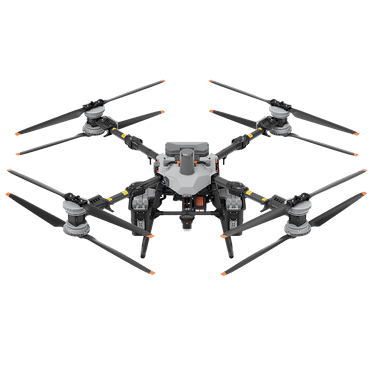
View DJI FC100 specs for more detailed information about features, functions, and configurations.Introducing the brand new DJI FC100—pushing the boundaries of the future. 85 kg payload capacity with dual battery, it can exchange 2 payload systems and integrates seamlessly with a powerful developer ecosystem. Redefine professional delivery and break through the operational boundaries. The intelligent and advanced safety and protection system enables unstoppable delivery from mountains to oceans, unlocking infinite possibilities.View DJI FC100 specs for more detailed information about features, functions, and configurations.Introducing the brand new DJI FC100—pushing the boundaries of the future. 85 kg payload capacity with dual battery, it can exchange 2 payload systems and integrates seamlessly with a powerful developer ecosystem. Redefine professional delivery and break through the operational boundaries. The intelligent and advanced safety and protection system enables unstoppable delivery from mountains to oceans, unlocking infinite possibilities.
- Product code
- FLYCART-100
- Category
- Cameras & Optics
- Weight
- 55.2 kg
- Power
- 6.5 W
Specifications
Aircraft
- Weight (without payload)
- 55.2kg (with Lifting system); 60.2kg (with Winch system); Excludes the weight of the battery, dual battery compartment and accessories, cable, and hook.
- Max Takeoff Weight
- 170kg; The 170kg maximum takeoff weight is the performance specification of the drone. Please follow local laws and regulations in actual use. In the following countries and regions the maximum takeoff weight is restricted to 150kg: Brazil, Japan, Australia, Turkey, Saudi Arabia, Argentina.
- Max Diagonal Wheelbase(motor to motor)
- 2330mm
- Diagonal length (tip to tip)
- 3904mm
- Dimensions (arms & propellers unfolded)
- 3220mm × 3224mm × 975mm
- Overall dimensions arms unfolded, propellers folded)
- 1820mm × 1840mm × 975mm
- Overall dimensions (arms & propellers folded)
- 1105 mm × 1265 mm × 975 mm
- Folding Method
- Towards body
- Loadable Battery Quantity
- Supports dual battery and single battery configurations; Single battery Mode is for emergency use.
- Max Flight Distance
- Under 149.9kg takeoff weight: dual battery 12 km, single battery 6 km; This data is obtained from DJI FC100 equipped with fully charged new battery at a takeoff weight of 149.9kg, flying at a constant optimal speed to 0% charge in a windless environment at 25 ° C at sea level. Results may vary depending on the environment, actual use, and firmware version. Always pay attention to app reminders during actual operation.
- Max Hovering Endurance
- Under 149.9kg takeoff weight: dual battery 12 minutes, single battery 6 minutes; This data is obtained from DJI FC100 equipped with fully charged new battery at a takeoff weight of 149.9kg, hovering to 0% charge in a windless environment at 25 ° C at sea level. Results may vary depending on the environment, actual use, and firmware version. Always pay attention to app reminders during actual operation.
- Max Flight Time
- Under 149.9kg takeoff weight: dual battery 14 minutes , single battery 7 minutes.; This data is obtained from DJI FC100 equipped with fully charged new battery at a takeoff weight of 149.9kg, flying at a constant optimal speed to 0% charge in a windless environment at 25 ° C at sea level. Results may vary depending on the environment, actual use, and firmware version. Always pay attention to app reminders during actual operation.
- Operating Temperature
- -20℃ to 40℃; Measured with estimated solar radiation of 960 W/m 2. Long-term exposure to high temperatures may shorten the service life of certain components.
- Ingress Protection Rating
- IP55; The protection rating is not permanent and may decline due to aging and wear caused by long-term use. The protection rating does not apply to the propulsion system. After a flight in rain, it is recommended to keep it idling on the ground for 1 minute to prevent corrosion or rust to afflict the propulsion system (precipitation of more than 24.9 mm within 24 hours).
- Hovering Accuracy (with strong GNSS signal)
- RTK positioning enabled:; ± 10 cm (horizontal), ± 10 cm (vertical); RTK positioning disabled:; ± 60 cm (horizontal), ± 30 cm (vertical)
- RTK/GNSS Operating Frequency
- GPS + Galileo + BeiDou + GLONASS
- Max Ascent Speed
- 5 m/s; Measured in dual battery mode at sea level in a 25℃ windless experimental condition.
- Max Descent Speed
- 5 m/s; Measured in dual battery mode at sea level in a 25℃ windless experimental condition.
- Max Horizontal Speed
- 20 m/s; Measured in dual battery Mode at sea level in a 25℃ windless experimental condition.
- Max Flight Altitude(above the sea level)
- 6,000 m; Drone payload capacity decreases with increasing Taking off Height. 6,000 m above sea level is the maximum safe Height for the drone with two batteries and no payload (Taking off at 4,500 m above sea level).
- Maximum Flight Altitude (relative to takeoff point)
- 1,500 m; flight altitude is constrained by Taking off altitude. The maximum flight altitude for DJI FC100 is 6,000 m.
- Max Wind Speed Resistance
- 12 m/s; The maximum wind resistance during the Taking off and Land Stage is 12 m/s.
Propulsion System
- Stator Size
- 155 × 16 mm
- Motor KV Value
- 60 rpm/V
- Propeller Material
- Carbon Fiber Composite
- Propeller Dimensions
- 62 inches(1574.8mm)
- Propeller Type
- Dual-Blade Folded Propeller
- Number of Rotors
- 8 pairs
Safety System
- Safety System Type
- Front Millimeter-Wave Radar; Rear Radar (Single Board); Downward Radar (Single Board); LiDAR; Quad-vision System; FPV
- Millimeter-Wave Radar EIRP
- <20 dBm (NCC/MIC/KC/CE/FCC)
- Operating Temperature
- -20° to 40° C (-4° to 104° F)
- Operating Environment Requirements
- Adequate light and discernible surroundings
- Operating Power Consumption
- LiDAR: 6.5 W; Front Radar: 18 W; Downward Radar: 5 W; Rear Radar: 5 W
- Field of View (FOV)
- LiDAR: Vertical 272°, Horizontal 60°; Front Radar: Horizontal 360°, Vertical ±45°; Downward Radar: Left/Right ±12.5°, Front and Back ±22.5°; Rear Radar: Left and Right ±45°, Front/Back ±45°; Quad-vision SystemHorizontal 360°, Vertical 180°; FPV Camera: Horizontal ±86°, Vertical 108°
- Measurement Range
- ≤ 60 m; The effective sensing range and its ability to avoid and bypass obstacles will vary depending on the ambient light, rain, fog, and the material, position, shape, and other properties of the obstacles. Downward sensing is used to assist in Terrain Following flight and altitude stabilization, while other directions assist with obstacle avoidance. AR safety assistance features serve only as supplementary hints, operators must confirm the surrounding environment's safety during operation.; Note 1. Downward sensing assists in Terrain Following flight. If the bottom collides with obstacles, it is considered user responsibility.; Note 2. Due to limitations in safety system performance, the aircraft cannot automatically avoid moving objects, and accidents of this nature will be attributed to user responsibility.; Note 3. Cargo obstacle avoidance is only for auxiliary flight; if the cargo and lifting caboe collide with an obstacle, it is the customer's responsibility.
DJI O4 Video Transmission
- Max Transmission Distance
- 20 km (FCC); 10 km (CE); 12 km (SRRC); 10 km (MIC); Measured in an unobstructed environment free of interference. The above data shows the farthest communication range for one-way, non-return flights under each standard. During your flight, please pay attention to reminder on the DJI Delivery App.
- Operating Frequency
- 2.400 GHz to 2.4835 GHz; 5.725 GHz to 5.850 GHz; The supported operating frequency bands and corresponding available range vary by country/region. For Details, please refer to local laws and regulations.
- Transmitter Power (EIRP)
- 2.4 GHz: <33 dBm (FCC), <20 dBm (CE/SRRC/MIC); 5.8 GHz: <33 dBm (FCC), <30 dBm (SRRC), <14 dBm (CE)
- Live View Quality
- 1080p/30fps
- Antenna
- 4 Antennas, 2T4R
- 4G Enhanced Transmission
- Supported
Lighting
- Illumination Direction
- Forward, Downward
- Control mode
- Auto, Manual
- Max illumination power
- 46 W(Standard)
Parachute
- Model
- E2MSF-100A
- Touchdown speed
- ≤ 7 m/s; This data was measured at sea level, 25°C, in a windless condition, with the aircraft at its maximum takeoff weight, and the parachute open at a Height of 100 m.
- Parachute Shape
- Square
- Material
- Nylon
- Minimum Opening Height
- 100 m; When open at this height or above which ensures the aircraft reaches a stable velocity upon ground contact.
- Operating Temperature
- -20° to 40° C (-4° to 104° F)
- Ingress Protection Rating
- IP55
- Mainboard Power-off Battery Life
- ≥ 1 hour
- Memory Card Capacity
- Independent Storage, real-time recording of each flight, capable of recording 10 flights.
- Alarm method
- Buzzer alarm, and lighting alarm
- Opening Method
- Manual Opening, Auto Opening
DJI FlyCart 100 Flagship Winch System
- Model
- A2EWH-100A
- Dimension
- 960 mm × 805 mm × 669 mm
- Hook charge Method
- Wireless charge, Type-C charge; Wireless charge requires the hook to be fully tightened.
- Hook Supply Power Time
- 10 hours; Measured in an ideal windless environment at sea level at 25 °C. Results may vary to different degrees under different external environments, usage patterns, and firmware versions. Please refer to app prompts during actual use.
- Cable Length
- 0-30 meters
- Max Retraction Speed
- 1.2 m/s
- Weighing function
- Supported
- Hook opening and closing function
- Supports active control via APP or button
- Emergency escape Mode
- Cable Discard Escape
- Auto Blance Control
- Supported
- Manual wheel control for retraction
- Supported
- One-tap release and Retraction
- Supported
- Intelligent Deceleration Protection
- Supported
DJI Dual-Battery Lifting System
- Model
- A2EDL-100A
- Dimensions
- 960 mm × 805 mm × 669 mm
- Cable Length
- 10 meters
- Emergency Escape Mode
- Cable Cut Escape
- Auto Blance Control
- Supported
- Weighing function
- Supported
- Recommended Cable Length
- 10-15 meters
DJI DB2160 Intelligent Flight Battery
- Weight
- 14.7 ± 0.3 kg
- Capacity
- 41 Ah
- Standard Voltage
- 52 V
DJI DB2212 Intelligent Flight Battery
- Weight
- 15 ± 0.3 kg
- Capacity
- 41 Ah
- Standard Voltage
- 52 V
Remote Controller
- Model
- TKPL 2
- App
- DJI Delivery App
- Screen
- 7-inch LCD touchscreen; Resolution: 1920 × 1200; LIGHTEN: 1,400 cd/m²
- Charging Environment Temperature
- 5° to 40° C (41° to 104° F)
- Built-in Battery Life
- 3.8 hours
- External Battery Life
- 3.2 hours
- Charging Method
- Use a USB-C fast charging charger with a maximum power of no less than 65 W (maximum voltage of 20 V). A DJI portable charger is recommended.
- Charging Time
- 2 hours with built-in battery, 2.5 hours with built-in and external battery (shutdown status according to official charging method)
- 4G Enhanced Transmission
- Supported
- RTK High-Precision Positioning System Module
- Supported
- Operating Temperature
- -20° to 50° C (-4° to 122° F)
- Dual Operator Mode
- Supported; The second remote controller needs to be purchased separately.
SDK
- PSDK Communication Interface
- Eport-Lite; When connecting a third-party payload externally, an additional purchase of the DJI FC100 PSDK Connection Cable Combo is required.
- PSDK Power Interface
- Supports 3000 W; When connecting a third-party payload externally, an additional purchase of the DJI FC100 PSDK Connection Cable Combo is required.
C12000 Intelligent Power Supply
- Charger Model
- CSX901-12000
- Dimensions
- 456 mm × 291 mm × 107 mm
- Weight
- 13.13 kg
- Input Voltage
- Three-phase AC input: 175-520 V; Single-phase AC input: 200-264 V
- Output Voltage
- 62 V
- Rated Output Current
- 194 A
- Rated Power
- 12,000 W (three-phase 380 V input); 3,000 W (single-phase 220 V input); Actual output power may vary due to local power grid conditions, such as distance, Cable material, and wire gauge.
- Charging Time
- 9 minutes; Time to recharge from 30% to 95% battery level at sea level, with an environmental temperature between 15° and 40° C. Fast recharge is supported when battery cell temperature is within the Range of 15° to 75° C. Charging Time may vary depending on factors such as input power, ASL, and initial charge level.
- Protection Functions
- Over-temperature, over-voltage, under-voltage, short-circuit, fan stall, and other protection functions
- Operating Temperature
- 0° to 40° C (32° to 104° F)
- Output Channels
- 1
D14000iE Multifunctional Inverter Generator
- Output Channels
- 1. DC recharge output 42-61.6V/11500W; 2. Air-cooled radiator charge 12V/6A; 3. AC Output 220V/1500W; The charging station's output power is affected by factors such as altitude, fuel quality, etc.
- Charging Time
- 9 minutes; Time to recharge from 30% to 95% battery level at sea level, with an environmental temperature between 15° and 40° C. Fast recharge is supported when battery cell temperature is within the Range of 15° to 75° C. Charging Time may vary depending on factors such as input power, ASL, and initial charge level.
- Fuel tank capacity
- 30L
- Starting method
- One-button start
- Operating Temperature
- 0° to 40° C (32° to 104° F)
- Dimensions
- 757 mm × 704 mm × 677 mm
- Weight
- 87±0.5 kg; Weight measured at sea level Height. The D14000iE All-around Inverter Charging Station's weight includes 2 kg for the wheels and handle, which can be optionally attached or detached during use.
- Fuel type
- 92 octane gasoline or higher
- Reference fuel consumption
- 500 mL/kWh
- Engine Oil Capacity
- 1.3L
- Engine Oil Type
- DJI Dedicated Engine Oil S10W-40
D-RTK 3 Multifunctional Station (Optional)
- Dimensions
- Diameter: 163 × 89 mm (without OcuSync Directional Antennas)
- Weight
- Approximately 1.26 kg
- Operating Frequency
- Relay Station Mode:; O4: 2.4 GHz/5.2 GHz/5.8 GHz; Base Station Mode:; O4: 2.4 GHz/5.8 GHz
- Relay Station Range Enhancement
- Relay Station performance improvement:; Addresses severe obstructions (e.g., Buildings, mountains): 3 to 5 times performance improvement; Addresses minor obstructions (e.g., trees, glass): 1 to 3 times performance improvement; The relay station needs to be deployed in a high, unobstructed location free from interference.
- built-in battery operating Time (at room temperature)
- D-RTK 3 Multifunctional Station:; Relay Station: 4 hours; Base Station: 7 hours; At low temperatures, the range performance may decrease. It is recommended to use a Power Supply that supports the USB PD3.0 Protocol for charge.
- Ingress Protection Rating
- D-RTK 3 Multifunctional Station: IP67; Ensure all rubber plug interfaces on the body are properly mounted.
- Positioning Accuracy
- Base Station Mode and Relay Station Mode; Base Station Positioning Error:; Single Point Accuracy (Uncalibrated):; Horizontal: 1.5 m (RMS); Vertical: 3.0 m (RMS); Satellite-based Differential Accuracy:; Convergence Time: 20 min; Horizontal: 30 cm (RMS); Vertical: 40 cm (RMS); * Measurement accuracy depends on various factors. This value is obtained under normal conditions with an unobstructed view, good satellite distribution, low ionospheric activity, and no electromagnetic interference or multipath effects.
DJI Battery Incubator(Optional)
- Operating Temperature
- -20° to 40° C (-4° to 104° F)
